Wednesday, November 28, 2018

"I Didn't Do My Homework Because..." Fun Creative Writing

One of my favourite picture book artists right now is French artist Benjamin Chaud who worked with author Davide Cali to create a hilarious series of books about excuses.  The one I read with our grade 3 and 4 students is called I Didn't Do My Homework Because...
After reading the book to students I set them to create their own silly excuses and doodles in just 10 minutes. 
They then got the opportunity to share their excuses with the class, which they were all very excited to do.  

They had so much fun with this activity and it was so easy to pull off.  Their amazing excuses are on display in the hall downstairs.  Make sure to check them out so you don't get fooled when you hear them in class.


Thursday, November 22, 2018

Well-Being Book Series with Shannon

I got the opportunity to collaborate with our wonderful school counselor Shannon for a Well-Being Book Series session for our Kindergarten to grade 4 classes.  It was Kindness Week at the OJCS and the focus today was empathy.  Our students got to learn a very valuable lesson about the meaning of empathy and how it feels to 'stand in someone else's shoes.'

We started off the session by reading each group a book.  For our K and 1 groups we read 'When I Care About Others' by Cornelia Maude Spelman.  It is a very simple book but a valuable teaching tool for younger students.  

For our grade 2 to 4s we read a beautiful book called 'The Three Questions' by Jon J. Muth about a boy who is trying to answer three important questions;
  1. When is the best time to do things?
  2. Who is the most important one?
  3. What is the right thing to do?
After reading the story Shannon discussed the word 'Empathy' with the students and then did an exercise where they had to take turns standing on a pair of shoe prints and imagining what others would feel in made-up scenarios. 
The kids loved the exercise and the stories.  I am really looking forward to working more with Shannon on this book series and can't wait to choose books for our next session!

Wednesday, November 21, 2018

Let the OJCS Reading Challenge Begin!

This week we launch our school-wide reading challenge! 

Each teacher will decide on the number of books they want their class to aim to read from Nov 19th to May 1st as a group sum total.  This number should be a challenge but still very much attainable.

There is a list of categories that will be handed out to help direct student choices across a wide range of genres.  Each student (and teacher) will contribute to this class total, and when a book is finished, that student will post a brief book review on the school’s new library website (if the book was a library book.)  https://theojcs.booksys.net/opac/ojcs/

The prize is an end-of-year pizza party where there is the optional component that students can come to school dressed as their favourite literary character.  The second piece of this is that the students who meet or exceed reading from all of the categories will be recognized for their hard work and contribution to the class at an end-of-year assembly. 

We are so excited to get going!

Monday, November 12, 2018

Gaming Their Way to Good Digital Citizenship

This week and next week the library is running workshops on online safety and good digital citizenship.  The kids have been loving these workshops because the way they are learning these lessons is through an amazing Google game called 'Interland'.  This game is designed to guide students through four levels, each dealing with a particular issue.


The worlds are;
  1. Mindful Mountain - Share with Care - students are asked to determine who they should share certain types of information with.
  2. Reality River - Don't Fall For Fake - this game poses questions about how to protect yourself from phishing and other scams.
  3. Tower of Treasure - Secure Your Secrets - this level is about protecting private information and creating secure passwords
  4. Kind Kingdom - It's Cool to Be Kind - this level is about the importance of being kind online and standing against cyber bullying

The kids enjoyed the game so much they were asking to stay over recess and continue.  Our discussions before the game indicated that the children knew very little about how to protect themselves online.  But they took away so much from the game that our discussion after playing it was very rich.  I will be sharing this link with other grades and parents as I think this is a great tool for educating any student, not just the young ones.

Monday, November 5, 2018

Information Credibility

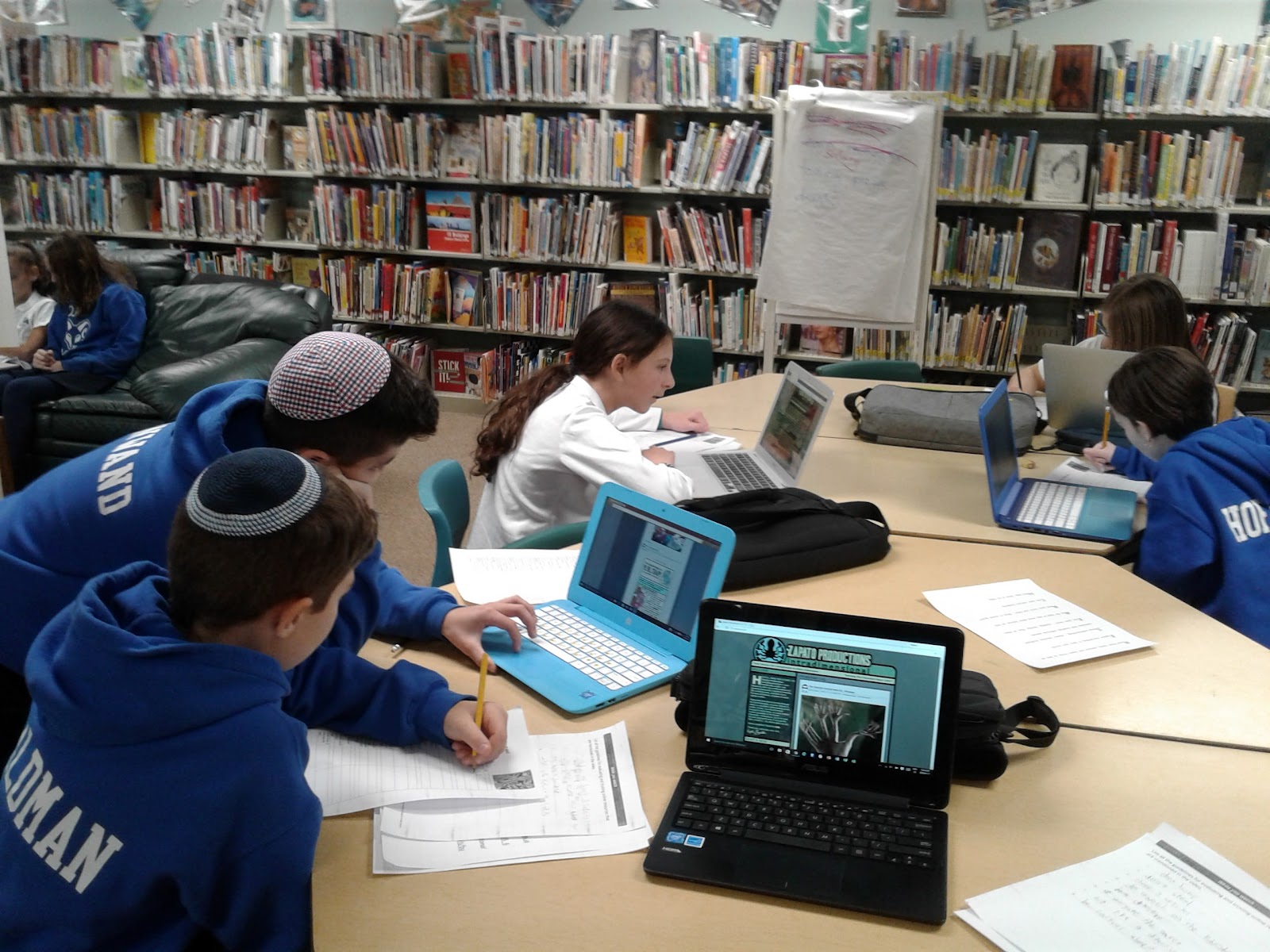
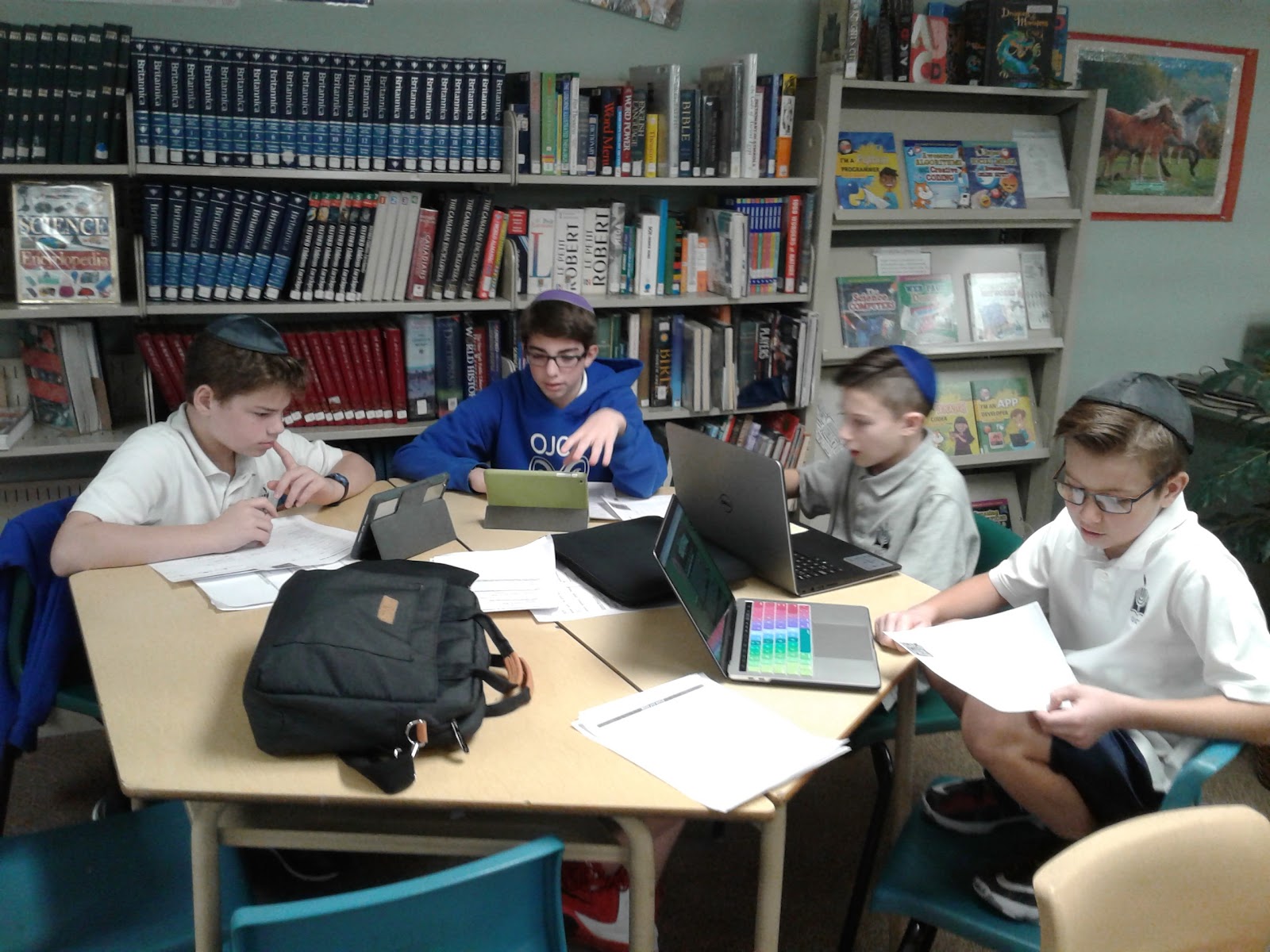
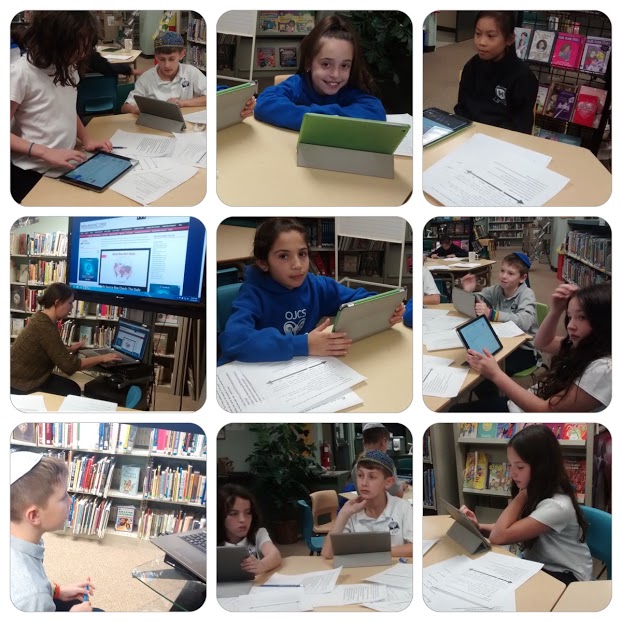
The library has kicked off this year's middle school research skills workshop series with a lesson on credible websites vs. non-credible websites and identifying fake news.  The students were asked to be detectives and jot down some of the ways you can identify which sites and articles are real and which are fakes.


Developing critical thinking is a skill that needs more attention than it gets.  Forbes reports that 75% of adults are fooled by fake news.

I had students looking at websites about explorers.  One of them was completely fake.  What I found interesting was that even information that seems very obviously ridiculous to an adult, such as a claim that Samuel de Champlain went to Disney World to celebrate winning 'Best Fort of the Year' from 'Better Forts and Ramparts Magazine', caused students to actually need to look up how long Disney World has been open because they weren't sure if this could actually be a possibility.
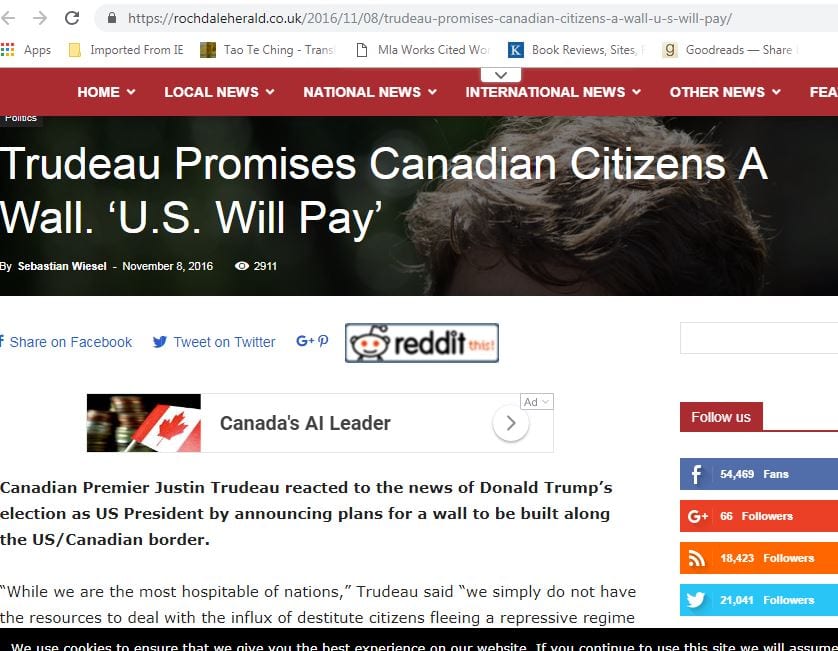
On our fake news exercise, some students weren't sure if Justin Trudeau was building a wall or not.  That is why it is so important to follow the rule of three and always compare three sources of information.


Is Justin Trudeau building a wall? The kids don't know!


These videos show a few clever teams who immediately went to the 'About' page on the news article or website they suspected was fake to learn more about the source.  It is important that they learn to look outside of the site to find out more as well.


I think it is also important not to take for granted when you are working with kids that something that seems very obvious to an adult is not very obvious to students in a time where when information is presented in a way that looks legitimate it is taken seriously.

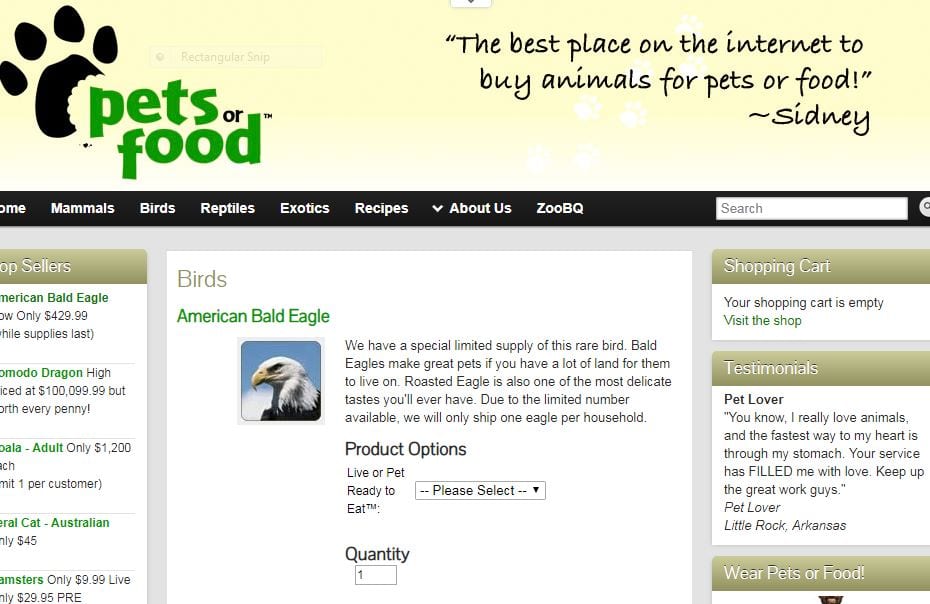
My favourite part of this activity was showing the students the fake website Pets or Food where you can buy exotic animals either alive or dead.  It is scary just how realistic this site is and that's what makes it such a great example.


I think we all had fun and it was very eye-opening; from my perspective as an observer of this exercise to see how much work we need to do, and their perspective when they came to see how easily they could be duped.  This workshop series will tie in nicely to future topics such as being safe online.

Our Library Catalogue Is Online!

We are so excited to announce that the OJCS Library catalogue is now online!  Students and teachers will have access to browse our collection from their classrooms, home, or even on your device as there is an app available for download.

Please check out the new site, formal training is coming very soon!
https://theojcs.booksys.net/opac/ojcs/

If you are too eager to wait for the training session, Log Ins for students and staff are uniform: first letter of first name, a period, then last name.  Password is books.
So for example mine would be:
Username: b.ruel
Password: books
Here is an example of what a full record in the new system looks like...


Teachers will have the ability to create book lists for their students and students will be able to write book reviews!


I can't wait to show you more, but for now I will leave it here.  Have fun exploring!


Friday, August 3, 2018

Learning By Heart

Learning By Heart

I spent some time reading the book 'Learning by Heart' by Roland S. Barth over the Summer.  The experience began with a certain amount of confusion as I came to realize that this book wasn't by the more famous French Roland Barthes who I studied quite a bit in University Communications courses.  Nope, this was Roland S. Barth, a Harvard Professor and famous educator, NOT the world's most famous semiotician.  I will admit I was a bit disappointed that I wasn't embarking on some radical and hyper complex read, but in the end I learned quite a bit anyway.

As I read the book I felt a lot of pride in knowing that the OJCS is travelling full tilt in the direction that Barth outlines.  Some examples that spring to mind are teachers taking the role of school leaders in a variety of areas, from student life to creating exciting prototype projects that will change the culture of the school in a really positive way.  One that I am personally involved in right now is creating outlets in the school for students to share their voices.  That is something Barth cites as critical to transforming a school culture for the better.

Another big one area that the OJCS is succeeding in is that staff and teachers have been offered more and more outlets to share 'craft knowledge' with one another, that is, our experiences of exciting classroom projects or ways to engage students, as well as things that don't work or haven't worked.

What really stood out for me in this book however, was the idea that the old-fashioned transmission-of-knowledge model, what Barth refers to as "Sit n' Git" i.e. students sitting quietly while teachers lecture, doesn't work.  Information retention was seen to be extremely low when anything is taught this way.  He suggests the ratio should look more like 15% teacher talk and 85% something else.  That something else is elaborated upon in subsequent chapters on Experiential Learning.  Barth states;
"I believe it is possible to create a school culture that is hospitable to human learning if we turn the tuning knob to stations that invite students and adults to take risks with a safety net, engage in novel and surprising experiences, enjoy a sense of adventure and purposefulness, share leadership with others, pose and solve problems for themselves, find the joy and freedom that comes with hard work, assume responsibility not only for their own lives but for the lives of others, and make a contribution to others."
Whew, a tall order!  But one that I would love to fill as I approach the 2018/2019 school year.  This year I will be leading students in every grade through workshops on research skills and media literacy.  Sometimes students walk through the library door for a Research Skills workshop and have already decided that it will be a snoozefest just based on the topic.  It is my responsibility to ensure that the kind of work we'll be doing in the library this year is deserving of eagerness and anticipation.

I will be sharing lots of pictures and videos here this year about the work we do in these workshops so keep checking in to see how we put into practice the excellent advice of the famous EDUCATOR Mr. Roland Barth.     

Thursday, May 24, 2018

Summer Reads

Students and teachers alike are already VERY ready for Summer Break, but we all need to do our part to encourage students to read over the break so as to prevent the dreaded "Summer Slide."

Infographic from biguniverse.com


I have compiled summer reading lists for grades 1 through 8 to support teachers in creating their own lists.  It is a nice idea to share suggested reading lists with parents so that they can encourage their children to keep learning over the summer months.  Teachers or parents offering incentives or prizes for reading over the summer is also something that could act as a tremendous motivator for our students.

Grade 1                                                                   
  1. Iggy Peck Architect by Andrea Beaty    
  2. The Princess in Black by LeUyen Pham
  3. Fly Guy by Tedd Arnold
  4. Bink & Gollie by Kate DiCamillo
  5. We Found a Hat by Jon Klassen

Grade 2
  1. Ivy & Bean by Annie Barrows
  2. Canadian Flyer Adventures by Frieda Wishinsky
  3. Jake Drake, Bully Buster by Andrew Clements
  4. The Bad Guys by Aaron Blabey
  5. Galaxy Zack by Ray O'Ryan

Grade 3
  1. Ramona Quimby, Age 8 by Beverly Cleary
  2. Goblins in the Castle by Bruce Coville
  3. Nancy Drew and The Clue Crew by Carolyn Keene
  4. Who Was/Who Is series
  5. Nighty-Nightmare by James Howe
  6. The Giving Tree by Shel Silverstein
  7. Shiloh by Phyllis Reynolds Naylor
  8. Bad Kitty for President by Nick Bruel
  9. Murder on the Canadian by Eric Wilson
  10. Charlotte's Web by E.B. White

Grade 4 
  1. Holes by Louis Sachar
  2. Lizard Music by Daniel Pinkwater
  3. A Series of Unfortunate Events by Lemony Snicket
  4. Artemis Fowl by Eoin Colfer
  5. The Fire Eaters by David Almond
  6. Superfudge by Judy Blume
  7. Ghosts by Raina Telgemeier
  8. Flora & Ulysses by Kate DiCamillo
  9. Boy by Roald Dahl
  10. A Wrinkle in Time by Madeline L'Engle


Grade 5
  1. No More Dead Dogs by Gordan Korman
  2. Percy Jackson by Rick Riordan
  3. Kate by Jean Little
  4. The Call of the Wild by Jack London
  5. Wildwood by Colin Meloy
  6. Bridge to Terebithia by Katerine Paterson
  7. Dear Dumb Diary by Jamie Kelly
  8. Hereville - How Mirka Got Her Sword by Barry Deutch
  9. The Hero and the Crown by Robin McKinley
  10. The Mysterious Benedict Society by Trenton Lee Stewart
Grade 6
  1. The Golden Compass by Philip Pullman
  2. The Secret Garden by Frances Hodgson Burnett
  3. The Land of Stories by Chris Colfer
  4. Ignatius Macfarland: Frequenaut! by Paul Feig
  5. Anne of Green Gables by Lucy Maud Montgomery
  6. The Root Cellar by Janet Lunn
  7. Rules by Cynthia Lord
  8. Smile by Raina Telgemeier
  9. The Sky is Falling by Kit Pearson
  10. Birdland by Tracy Mack

Grade 7
  1. Amulet by Kazu Kibuishi
  2. The House of the Scorpion by Nancy Farmer
  3. The Sisterhood of the Traveling Pants by Ann Brashares
  4. The Astonishing Life of Octavian Nothing by M.T. Anderson
  5. Pendragon by D.J. Machale
  6. Miss Peregrine's Home for Peculiar Children by Ransom Riggs
  7. Hatchet by Gary Paulsen
  8. The Selected Works of TS Spivet by Reif Larsen
  9. The Adventures of Huckleberry Finn by Mark Twain
  10. Lizzie Bright and the Buckminster Boy by Gary D. Schmidt
Grade 8
  1. I am the Messenger by Markus Zusak
  2. Black and White by Eric Walters
  3. How I Live Now by Meg Rosoff
  4. School's Out Forever by James Patterson
  5. The Tiffin by Mahtab Narsimhan
  6. Life of Pi by Yann Martel
  7. Watership Down by Richard Adams
  8. The Berlin Boxing Club by Robert Sharenow
  9. The Summoning by Kelley Armstrong
  10. The Walled City by Ryan Graudin


Monday, March 19, 2018

Practice Using Research Tools with Grade 3

Our grade 3 teacher Julie wanted to bring down her two classes to begin research on a project about Canadian settlers.  Our idea was to divide up the students into two groups; one group would focus on taking notes from the book resources we had on the topic, and the other group would use ipads or laptops to do their research using links that I shared through Google Classroom ahead of time.

I made sure to emphasize to students how critical it was that they take notes in THEIR OWN WORDS!


Students had a wide variety of links they could choose for their research... from online Canadian Encyclopedias to learning games about settlers to a video by the Canadian Film Board about pioneer life.  Depending on the learning style of the student, they tended to know in advance what sites they wanted to use.

This student is playing a fun game where she matched health ailments to pioneer remedies.

Quite a few students were uncomfortable using the books and were both resistant to using them and frustrated by them.  Many even attempted to go straight to YouTube for research even though I had provided links because that is what they do at home. Information is not so instantly accessible in a book as it is when using a device.  And yet most of the books were much more comprehensive and useful than the online links.

I think this indicates that we need to spend more time utilizing non-fiction books in the classroom so that kids develop an ease in using the printed page when they are working.  The only children who seemed to really excel with using books in research were our avid readers, the students who are always in the library signing out books. 


This student is using an approved site to conduct his research.  It has very easy to use links that showed photos of tools used in pioneer times.

Reading non-fiction and using those books in research projects is the foundation of teaching children how to use the internet for research.  Once you've learned to use indexes, to skim books for the content you need, to do proper book citations, then and only then can you move into using similar techniques when doing online research.  What's more, the books in our school's collection are always written by experts, unlike many of the websites students tend to try to use for research online, which means that the information is going to be accurate and appropriate for their projects.

This experience speaks volumes about how children from a very young age are taught to use technology to learn (via educational games, videos, online work)  at the expense of developing other ways of learning alongside it.  Both ways of learning need to be hand in hand to create a successful and literate student. 

Tuesday, February 27, 2018

Grade 7 and 8 - Comprehensive Research Skills Workshop


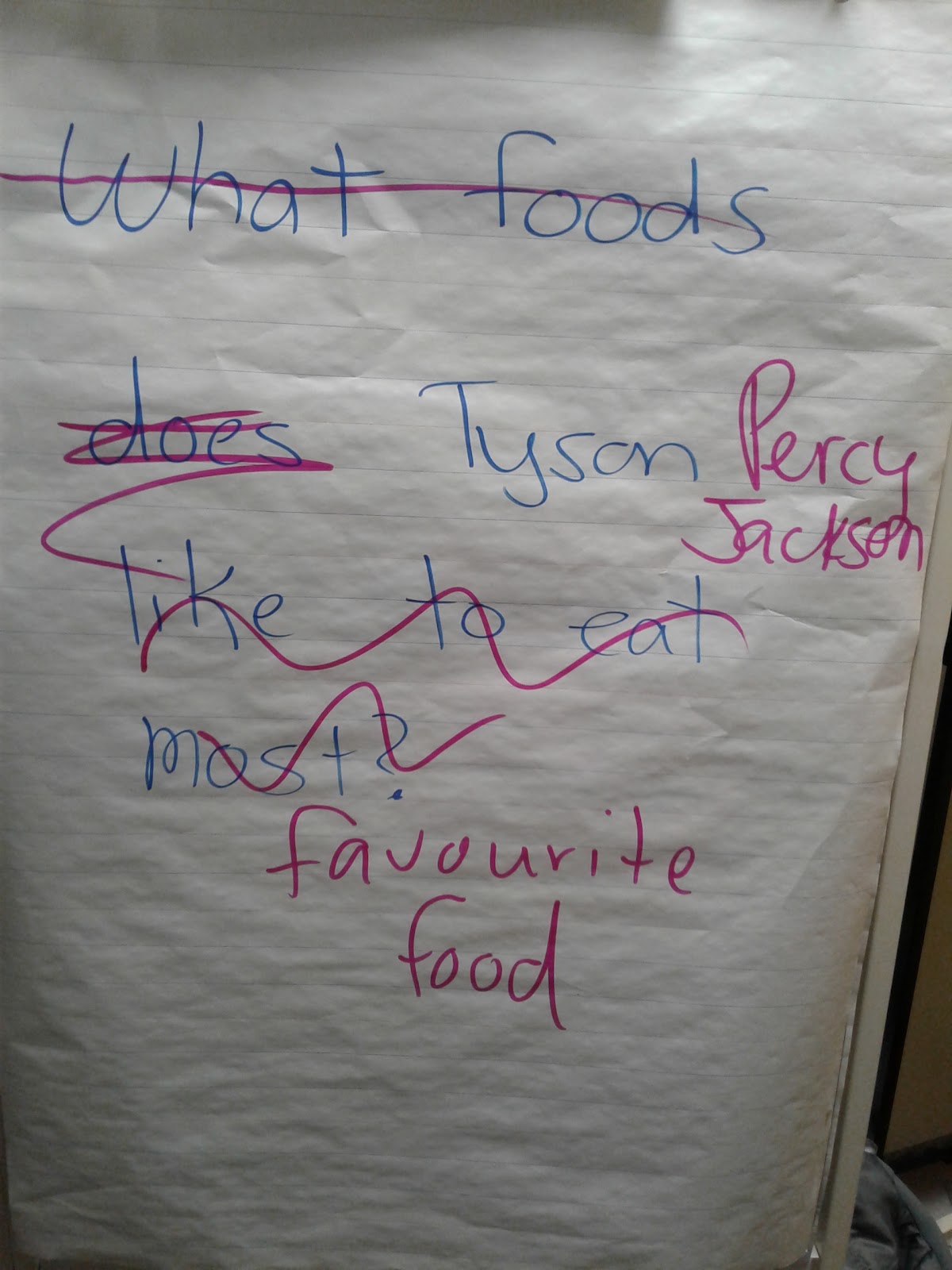
These two workshops with Rabbi Rottenberg’s 7 and 8s were the most intensive of the lot and covered it all, from exercises on forming effective queries in search engines, to learning proper MLA bibliography format, to examine credible and non-credible sites in research.  


We parsed some searches to find out which keywords were critical and which were not necessary to our search.

This exercise was based on a great Google Searching workshop that is available free online.

Picking the Right Search Terms

We worked on creating effective queries for many interesting questions.


Grade 8 had the toughest job, not only did they have to create a mini-bio on the celebrity of their choosing, they had to critically examine the sites they were using as they were going.  The results were both entertaining and encouraging as students started fitting together key concepts.


Overall these workshops have been incredibly rewarding for me and I hope to hear that the result of these workshops is that kids are handing in much better quality assignments and choosing their sources much more critically.

Grade 6 Research Skills Workshop


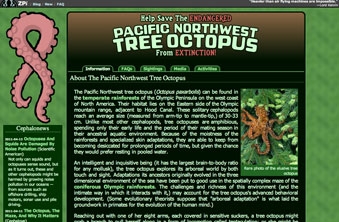
When I met with Rabbi Rottenberg’s Grade 6s we examined a fake website and used a critical checklist to determine if the site was or was not credible. This is such a fun exercise and really forces students to develop their critical thinking abilities as well as do some supplemental research to see what they can discover elsewhere about the author or the purported "tree octopus."
It was incredible how many kids could be so easily duped.
Luckily a few web saavy students knew it was a fake right away.
The checklist was a really great tool because it forced students to examine areas of the site that they might not otherwise have even thought twice about. 

Is this website credible or not?


Web Evaluation Checklist                                                                            

Authority
YES
NO
Is it clear who wrote the content?
 
 
Is the author an expert on the subject?  Does he have a good reputation?
 
 
Is there contact information that can be verified?
 
 
Accuracy
 
 
Do you believe that the content is true?
 
 
Does the information use correct grammar, spelling and sentence structure?
 
 
Are the photos real or potentially altered in some way?
 
 
Objectivity
 
 
Is the information presented in a balanced way?
 
 
Is all the information included?  Have some things been intentionally left out?
 
 
If there are ads on the page, do they have anything to do with then content of the page?
 
 
Currency
 
 
Is there any date to show when the content was created?
 
 
Is there any date to show when the content was last updated?
 
 
Do all the links work?
 
 
Coverage
 
 
Is the subject discussed in depth? 
 
 
Do the links on the page lead to trustworthy sites?
 
 
Compare
 
 
Run a search on this topic.  Can you find two other credible websites?


I can't recommend this Tree Octopus exercise enough for teachers of media and digital literacy!

Monday, February 26, 2018

Credible and Non-Credible Sources

My second workshop was with Rachel’s Grade 5 class.  I wanted to have a discussion with the students about credible and non-credible sites. 


This Google video was shared with the group.


To really get the message across, we worked on the following exercise;

Exercise: Two of these websites are news satire.  Two involve extreme bias based on the viewpoint of the source.  Two are from healthy news sources that generally are more centered or have not too much bias either way.  Identify them!   


Tips for searching the web to ensure you are using legitimate sites for research and news articles:

Where - Where is the content published?

Who - Look for an author at the beginning or end of the text. Try and find out a bit more about the author if time allows.

What - What kind of website is it? Business? News? Personal Blog? Entertainment? What is the purpose of the site? What is the point of view of this website? Is it biased? Unbalanced?

When - Look for a publication date.
I urge students to use mediabiasfactcheck.com/
If a source has extreme bias or is biased completely to the left or right, it is not
a great source for your news research.


If a source is more to the center, even if that means “left-center” or
“right-center”, then it is safe to use; E
ven the CBC is considered a bit left-center!
It was really interesting to observe just how much of a challenge it is for students to identify fake news.  I am looking forward to doing more work with students on this topic.