Showing posts with label early research skills. Show all posts

Thursday, April 22, 2021

I Love Animals! Animal Storytime

Today we read 3 amazing animal stories…

I Love Animals by Flora McDonnell

Animals Talk Too by Graham Meadows

The Home Builders by Varsha Bajaj, illustrated by Simona Mulazzani

Extension Activities

Kindergarten – Draw a picture of your favourite animal and write down its name.  If you aren’t sure how to spell it, ask a parent, teacher, or older sibling.

Grade 1 and 2 Mini Research Assignment – You will create a new Google Doc and paste a photo of your favourite animal in it.  On the page you will include at least 3 facts you learn from Google about your favourite animal.  If you aren’t used to using Google Docs, you can draw and write everything you learn on a piece of paper instead.  If you’d like, you can share your finished Google Doc with Brigitte Ruel b.ruel@theojcs.ca

Monday, February 3, 2020

Exploring Non-Fiction with Grade 1


Grade 1 visited the library on Friday for a workshop on exploring non-fiction.  We started off by discussing what some of the differences are between fiction and non-fiction, and grade 1 were already ahead of the game there and understood it quite well.  Non-fiction is a book that focuses on real events and real information.  It is a book we use to learn about something in most cases.

We moved on to talking about some unique parts found in most non-fiction books...
  • The table of contents
  • The glossary
  • The index
I showed them some examples of how we could utilize these parts of the book.

I gave the students a comprehensive walking tour of the non-fiction section of the library.  After that, we played a scavenger hunt game.  Students were given a slip of paper with a subject and a Dewey Decimal number on it.  They were tasked with using what they had learned to locate it.  
We all had a lot of fun and grade 1 may now be even more proficient at searching non-fiction than the rest of the school!

Thursday, October 17, 2019

Using Non-Fiction Books and Kids Search Engines for Research


Our grade 3s got a feel for what research is all about on Tuesday.  Research is defined by Merriam-Webster as;
1careful or diligent search2studious inquiry or examination especially investigation or experimentation aimed at the discovery and interpretation of facts, revision of accepted theories or laws in the light of new facts, or practical application of such new or revised theories or laws3the collecting of information about a particular subject
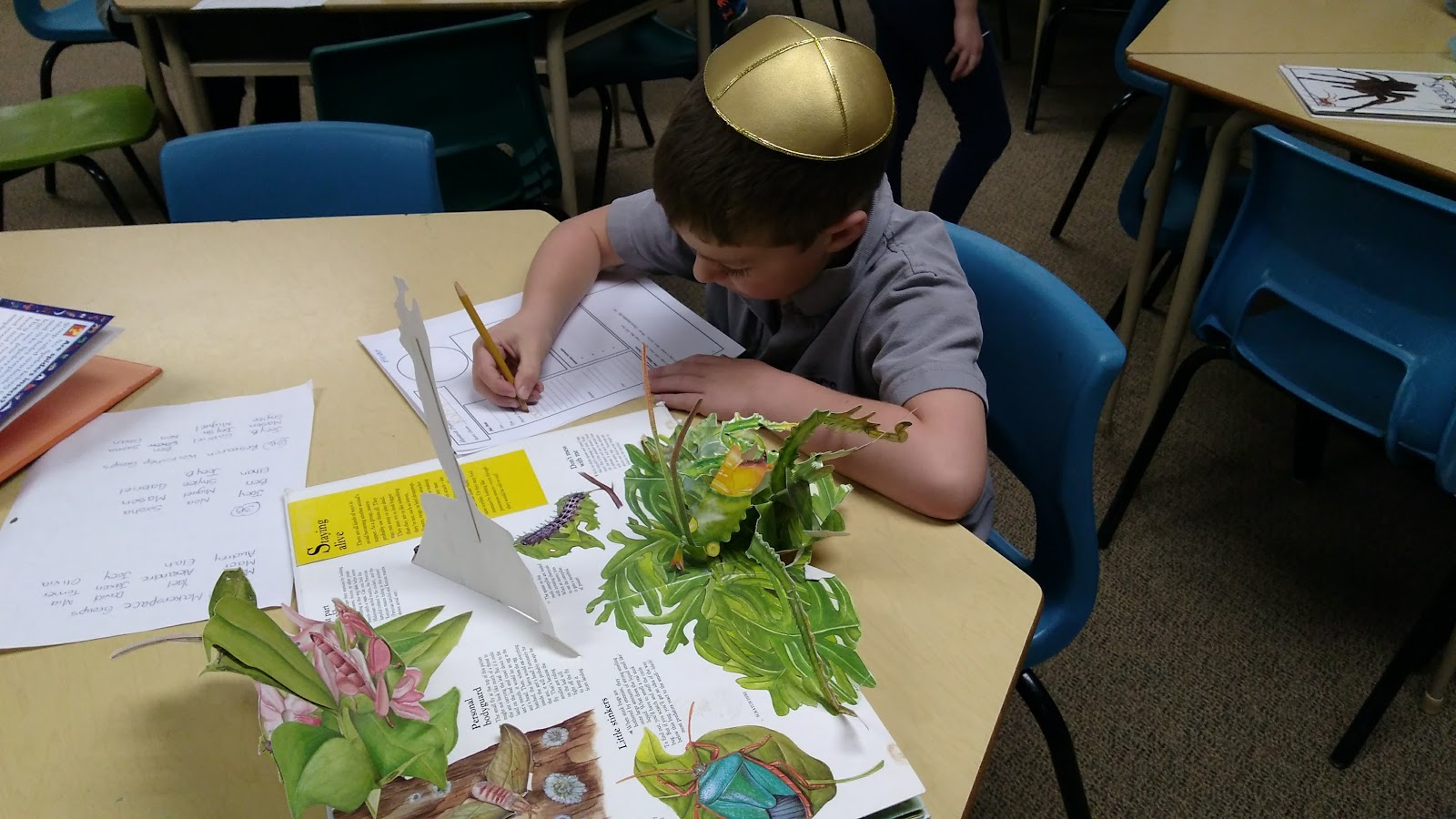
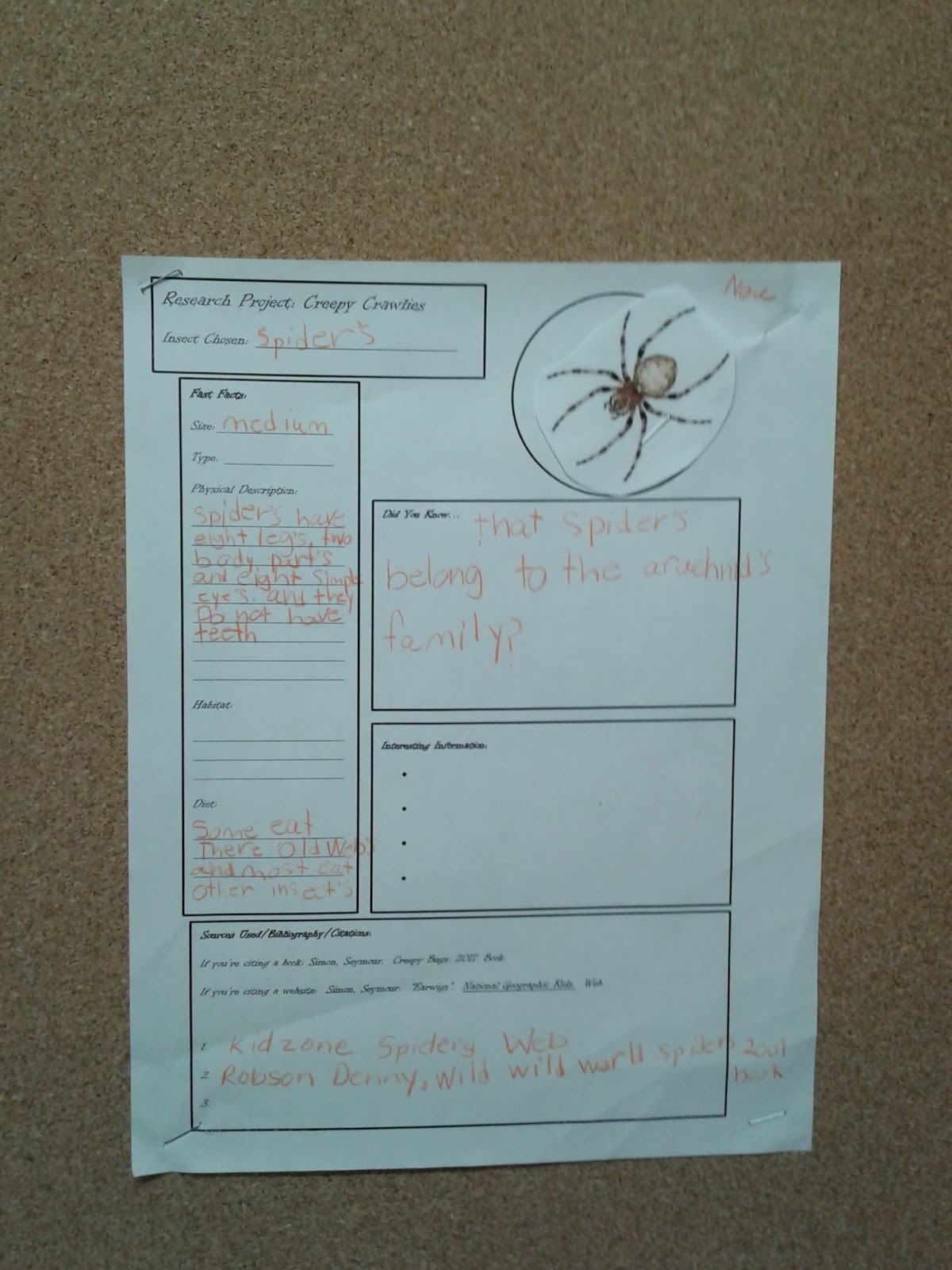
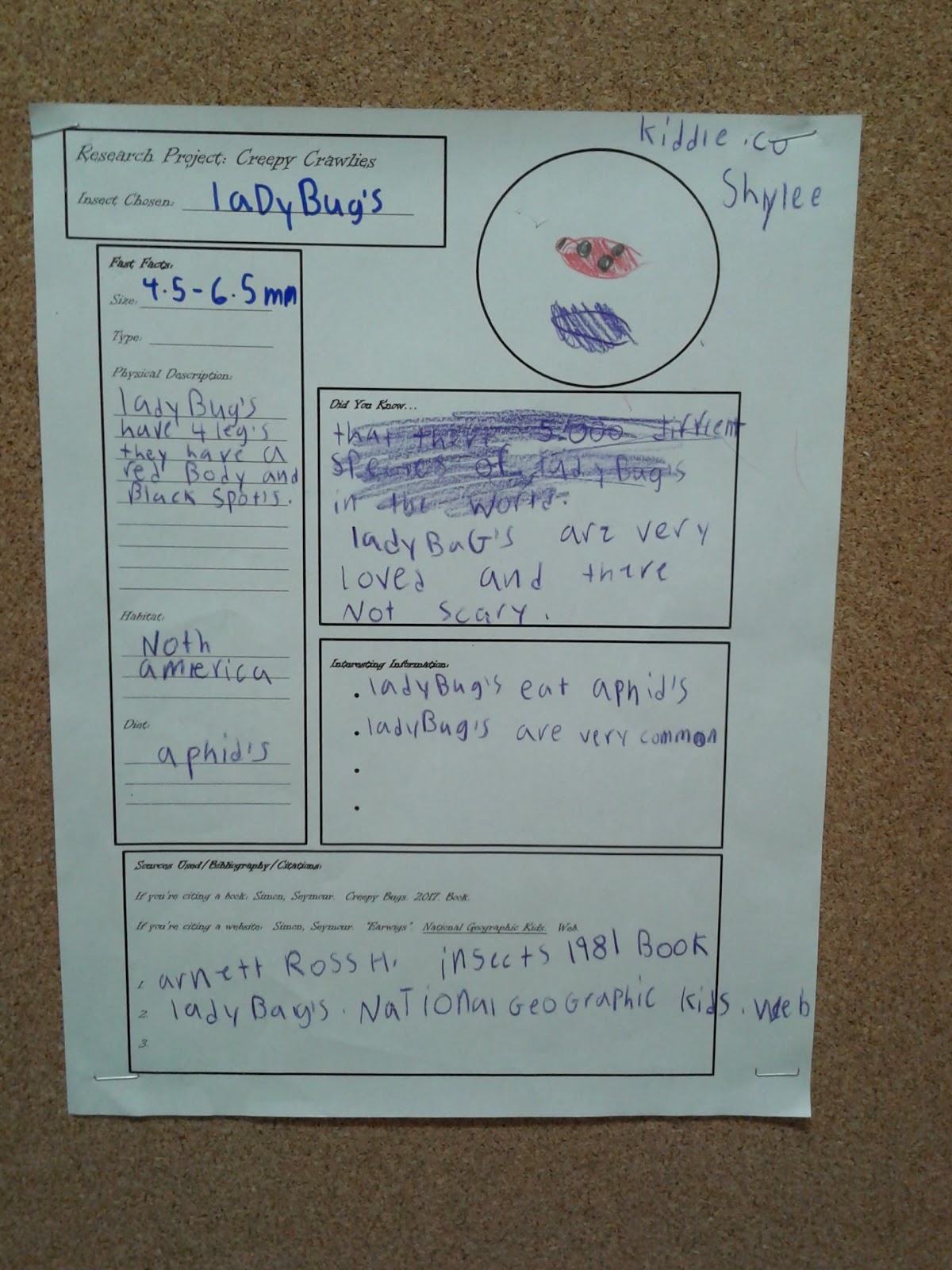
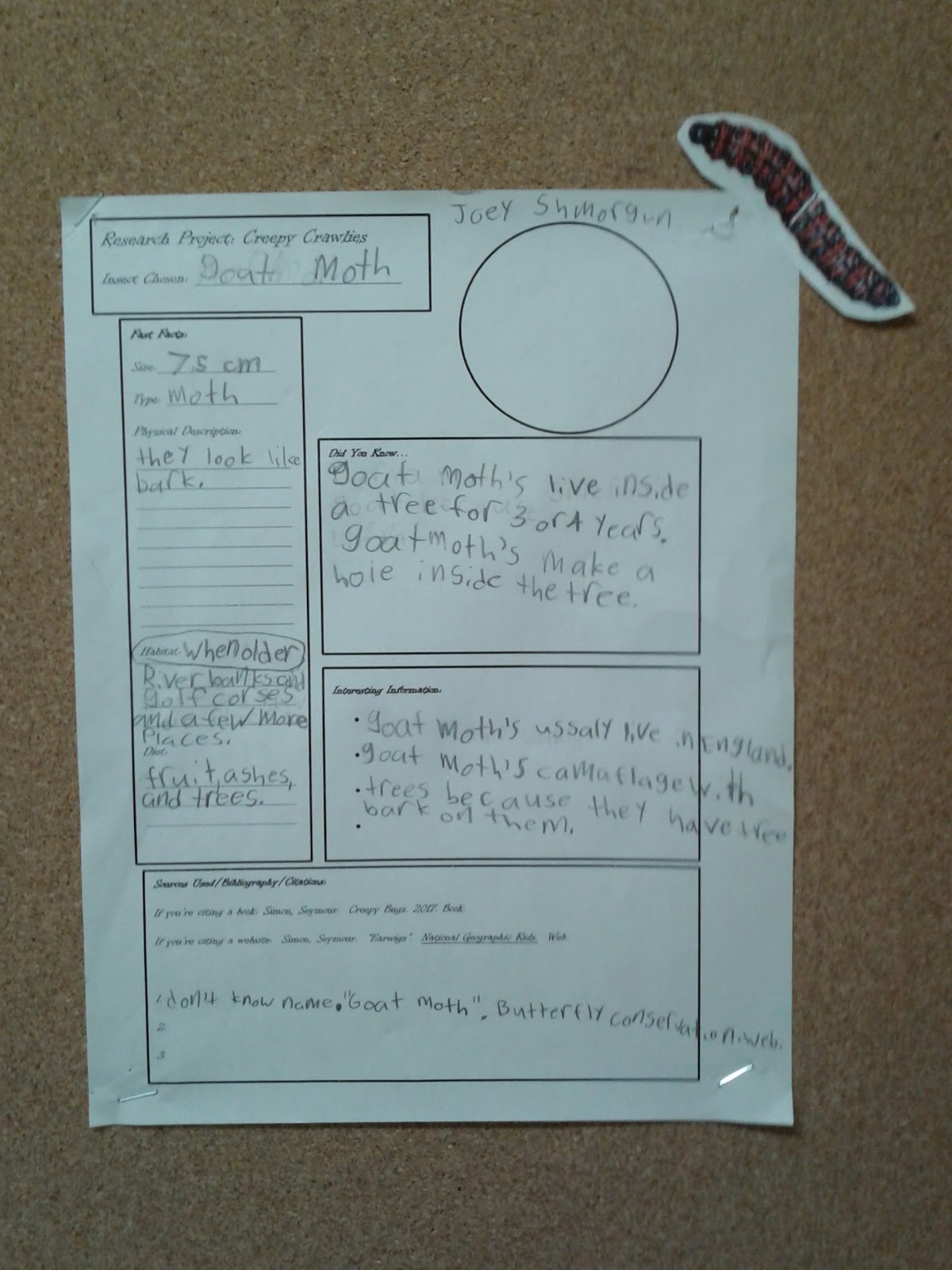
Our students were tasked to carefully and diligently search through our book resources for information about the insect of their choice using a Table of Contents and/or an Index page.  They took notes in their own words on the insect of their choice and kept track of their sources.
 
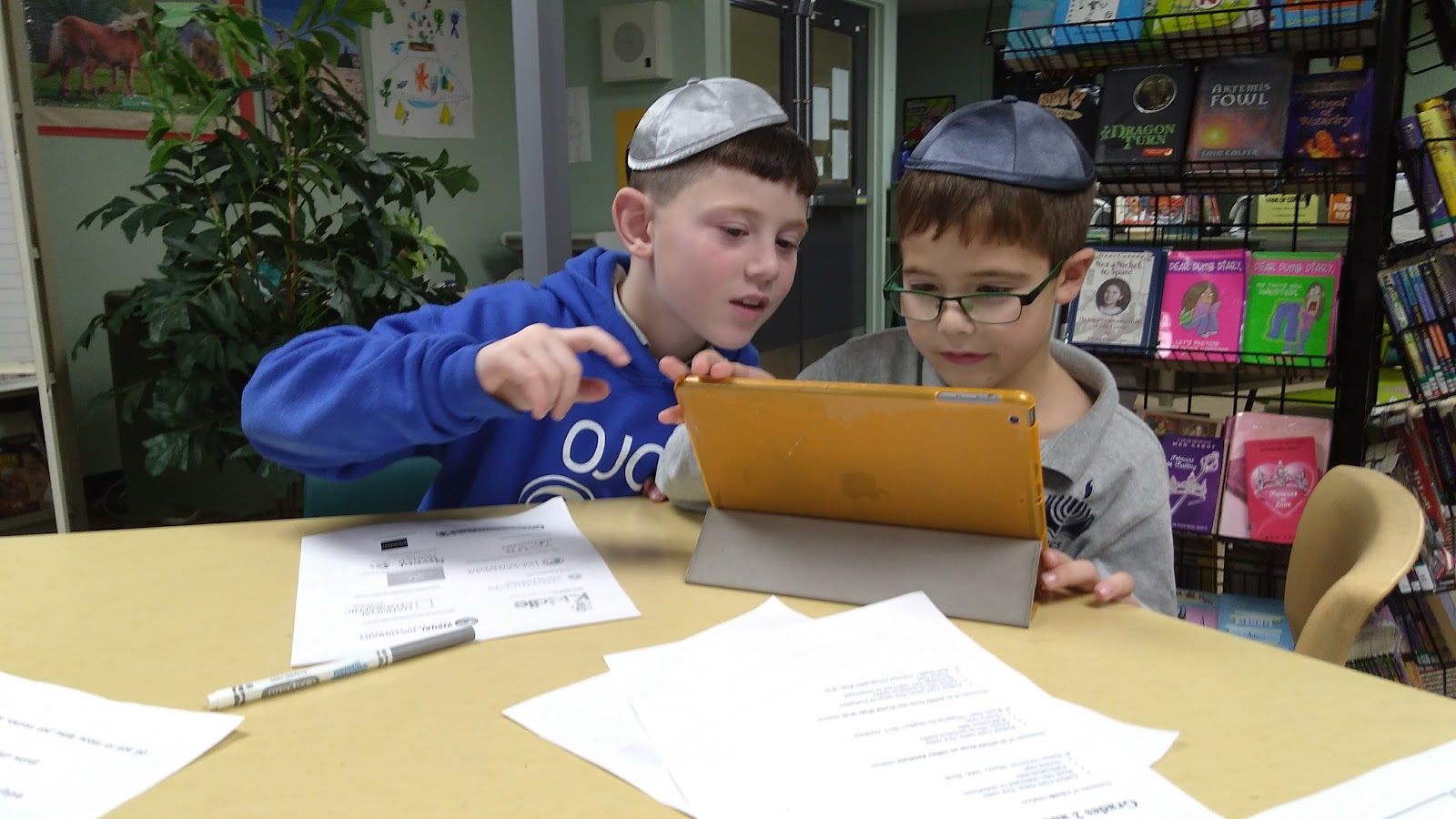
They were then asked to search their subject online using very specific keywords.  The proper use of keywords in online searching is an underrated skill.  It takes some forethought to clearly use keywords to create the perfect query and yield the best results.  A search on kiddle.co for 'centipedes' will not yield half as much useful information as the query 'centipede facts.'

They tracked their information in a special graphic organizer.

 It is important that we don't overlook the importance of teaching children to use books to find information.  Learning to quickly scan a page and find pertinent information is a critical part of learning.  So many children wanted to jump straight to finding the information they needed online, but learning to use non-fiction books is where children should begin.  Once they can easily navigate a book, they will have the ability to quickly and efficiently scan websites in the same way.

We will be continuing to fine-tune these skills with all of their research projects this year and I look forward to seeing this class on a regular basis here in the library.

Tuesday, May 7, 2019

You're Never Too Young to Start Thinking Critically

"Don't believe everything you hear" parents often scold their kids, and we are giving them the skills to do exactly that!  Grade 2 came for a visit to learn about how to use critical thinking and the 5 W's (who, what, when, where and why) when evaluating if information on a website is credible or not.


I was impressed at how quickly this group of grade 2s suspected that our website was indeed a fake (I guess it isn't that much of a surprise, their teacher is media savvy Ann-Lynn!)  Working through a checklist of questions, we investigated the credibility of the website as a group.


This group of students are already demonstrating that they are extremely capable of thinking critically and they will grow into students who won't be easily duped online.

Monday, February 4, 2019

Practicing Proper Notetaking Skills

I met with students in grades 3 and 4 this week to practice the art of proper notetaking.  Something which can come so naturally for adults is really a skill that needs to be taught and practiced so that bad habits don't form early.

I've heard many middle schoolers tell me that they cut and paste from various websites while taking notes and then put it all together for their final project.  That is a fast-track route to a zero for plagiarism!  Many are not aware that there is anything wrong with this method.  By starting with younger grades I am hoping to catch them before it starts.

We decided to use books for this exercise so that students could practice using the table of contents and indexes to find the information they were looking for.  They then had to write their notes in their own words and keep track of their sources using a bibliography template.

We also watched this helpful video about how to figure out what is and is not important to our research questions when researching.


 Let me assure you that this wasn't as boring of a workshop as it sounds. The grade 3s especially got into it and some chose to work over recess, which was inspiring!  They are all on the right track now!

Wednesday, January 16, 2019

Understanding Keywords with Grades 3 and 4

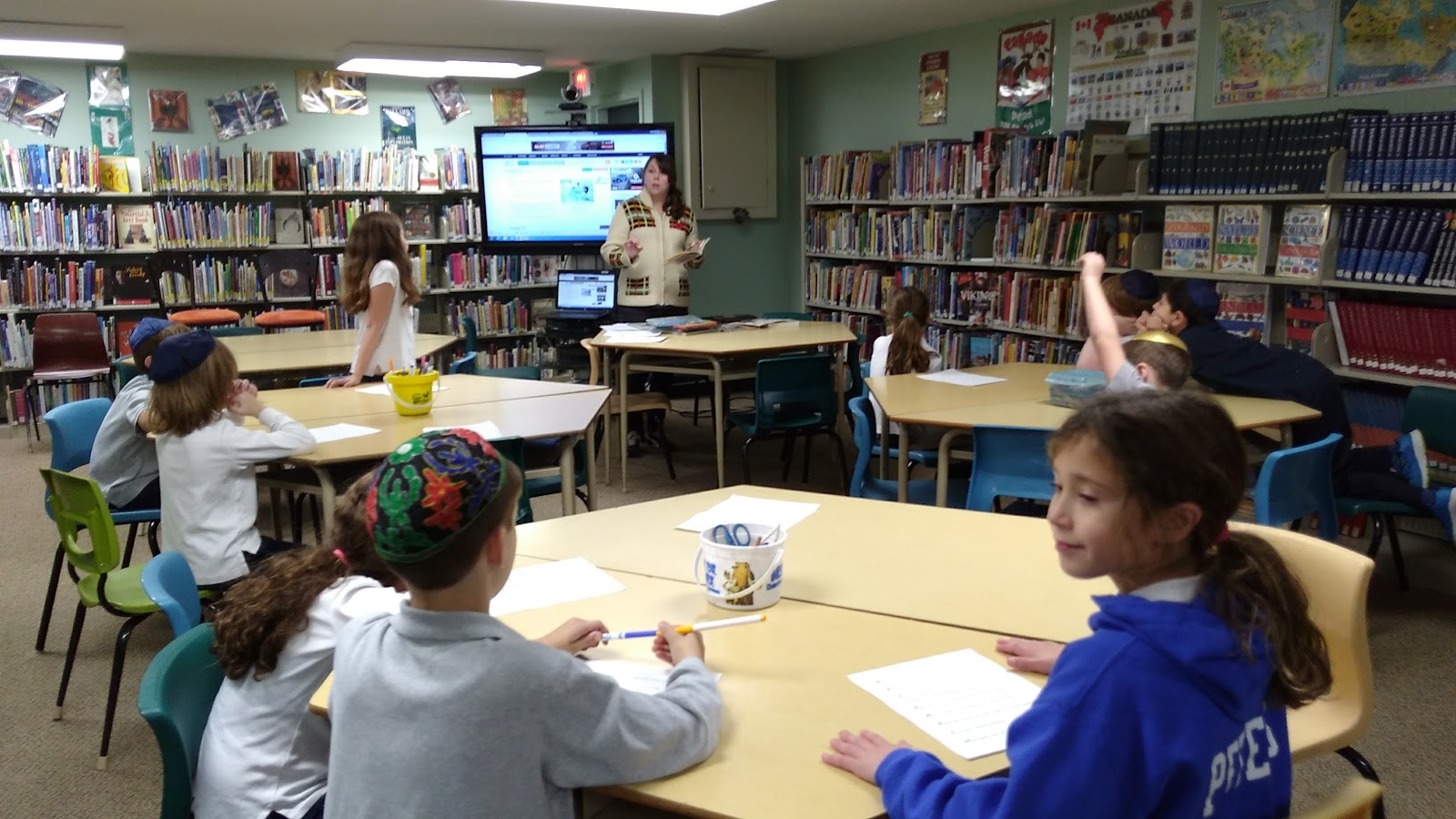
Today grades 3 and 4 learned all about strategies for effective internet searching.  Students tend to type long questions into the search bar of search engines and click on the very first site that comes up, regardless of the quality or relevance of the site.  Over the past few years I've been trying to convey to students the importance of selecting a few important words from their questions (keywords) and using those to bring in targeted results.  I have also been trying to get students to use some of the many excellent kid-friendly search engines to narrow their searches to results that are geared to their grade level.
Kidrex is https://www.alarms.org/kidrex/

Kiddle is https://www.kiddle.co/
Students worked through some research questions and experimented with keywords to find good results.  For example, with the question: How many teeth does an adult dog have?  The keywords were teeth and adult dog.  After a bit of practice they picked up finding keywords very quickly.  The keyword worksheets are available through the marvelous resource Common Sense Education.
Ms. Bennett and Ms. Mellenthin are going to practice this each day in the classroom.  I think it will have a really positive impact on the quality of student research.

Monday, February 26, 2018

Research Skills workshop with Grade 3

In my first set of workshops, I guided Julie’s Grade 3 class on the basics of web searching and using kid-friendly search engines such as Kiddle.  


I engaged them in a discussion about why shared sites like Wikipedia and YouTube are not recommended sources for academic research.  We went over a very simple bibliography and then I got students to team up and research bugs.  It was a fun project overall and the kids really got into their research subjects.


Here are some examples of the finished product:


I was very proud of these kids who had to pick up a lot of skills in a two period workshop.  They did great work!