Friday, April 23, 2021

What Are Social Bots?

A DigCit Info Post

You have probably heard people talk about something you find on social media called bots.  You may even have had an experience with bots liking, retweeting, or commenting on your social media posts.  But what exactly are bots?  Are they dangerous?

There was an event on TikTok a few months ago where many users suddenly had hundreds of likes and comments on every single video of theirs from other users with weird names who had no content of their own and who had Asian profile pictures.  Kids got very scared and there were TikTok videos circulating that the people liking and commenting were kidnappers.  It caused some pretty widespread hysteria.  But what these were were not real people, they were automated computer programs called bots that been designed to like and comment on anybody who had posted videos that followed certain criteria.  And they were not dangerous or threatening to TikTok users.
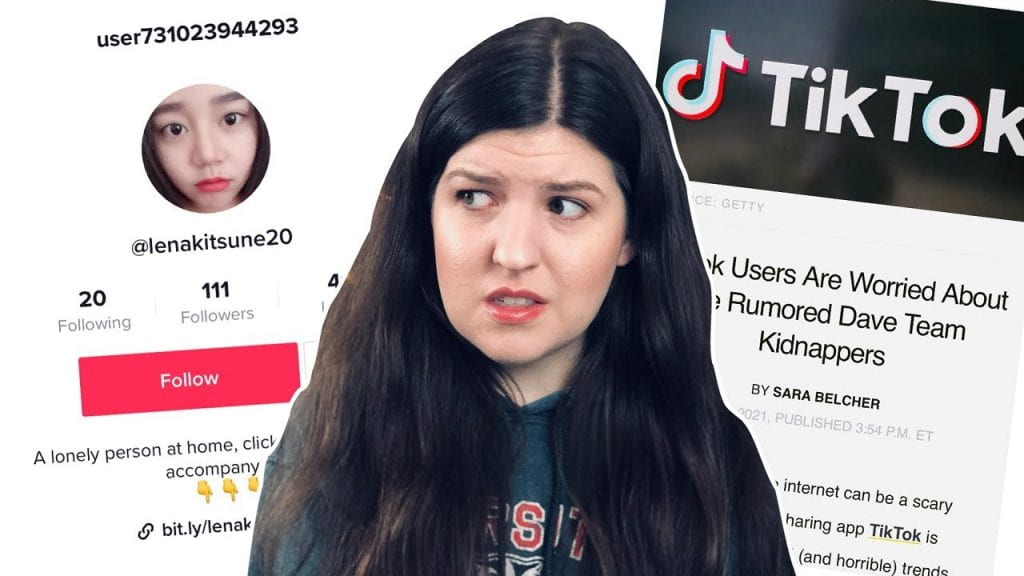
So the bots you find online are automated computer programs and the ones we find on social media are known as SOCIAL BOTS or CHAT BOTS.  These simple automated computer programs look for certain keywords in posts and decide what to comment and/or if to like the post.  To help explain what these automated computer programs do, let’s watch this excellent video on the topic.

So now that you know a lot more about bots, what clues could have helped TikTok users identify their new fans as bots instead of real users?  Post your answers in the comments section of this post!

It is important to note that there are real dangers with bots, and that is their ability to sway public opinion in a certain direction.  This can impact decisions made by governments, made by voters, and made by the general public like you.  For example, seeing that certain TikTok users have more likes than others may persuade you to follow that person, even if all those likes came from bots.

The Atlantic Magazine writes that – ‘About a fifth of all tweets about the 2016 presidential election were published by bots, according to one estimate, as were about a third of all tweets about that year’s Brexit vote. An Oxford Internet Institute report from last year found evidence of bots being used to spread propaganda in 50 countries.’(Schneier, Bruce.  Bots Are Destroying Political Discourse As We Know It, The Atlantic.  Jan 2020).

What this means is that bots are posting about politics and this has the power to influence other people’s opinions about issues that are really important, like who should be the next Prime Minister or whether people should legally have to wear masks in public.  And when the government is looking to social media to find out public opinion on a certain issue, they may instead be finding the opinions of bots that alter the truth of the majority.  Bots are also used to spread a lot misinformation, hate, and racist ideas.

So use your new bot-identifying skills and don’t fall for the opinions of bots!  But if they give you a like, a retweet, or a comment, don’t get too worried about it either.

Thursday, April 22, 2021

I Love Animals! Animal Storytime

Today we read 3 amazing animal stories…

I Love Animals by Flora McDonnell

Animals Talk Too by Graham Meadows

The Home Builders by Varsha Bajaj, illustrated by Simona Mulazzani

Extension Activities

Kindergarten – Draw a picture of your favourite animal and write down its name.  If you aren’t sure how to spell it, ask a parent, teacher, or older sibling.

Grade 1 and 2 Mini Research Assignment – You will create a new Google Doc and paste a photo of your favourite animal in it.  On the page you will include at least 3 facts you learn from Google about your favourite animal.  If you aren’t used to using Google Docs, you can draw and write everything you learn on a piece of paper instead.  If you’d like, you can share your finished Google Doc with Brigitte Ruel b.ruel@theojcs.ca

Grade 8 Workshop – The Risks of Sexting and Omegle

Here is a slides lesson to help students understand the risks of sexting, sending nude photos and videos, and Omegle.  To view the slides in full screen, click the 3 dots and hit ‘enter full screen’.

The News Literacy Project’s Checkology Program


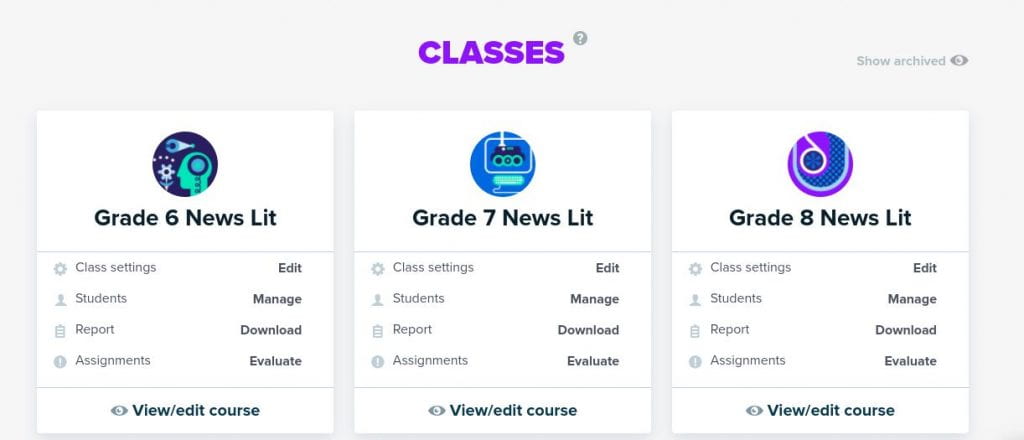
I wanted to take a moment to highlight an incredible program for our students that is available online.  I have been both impressed and amazed by the work that The News Literacy Project is doing to help build critical thinking skills in students.  The News Literacy Project is a non-profit and nonpartisan organization that is working to educate the public about how to separate fact from fiction in the news and how to assess news credibility.  They have developed an incredibly comprehensive online program called Checkology for middle school  and high school aged students that can be tailored for each classroom.

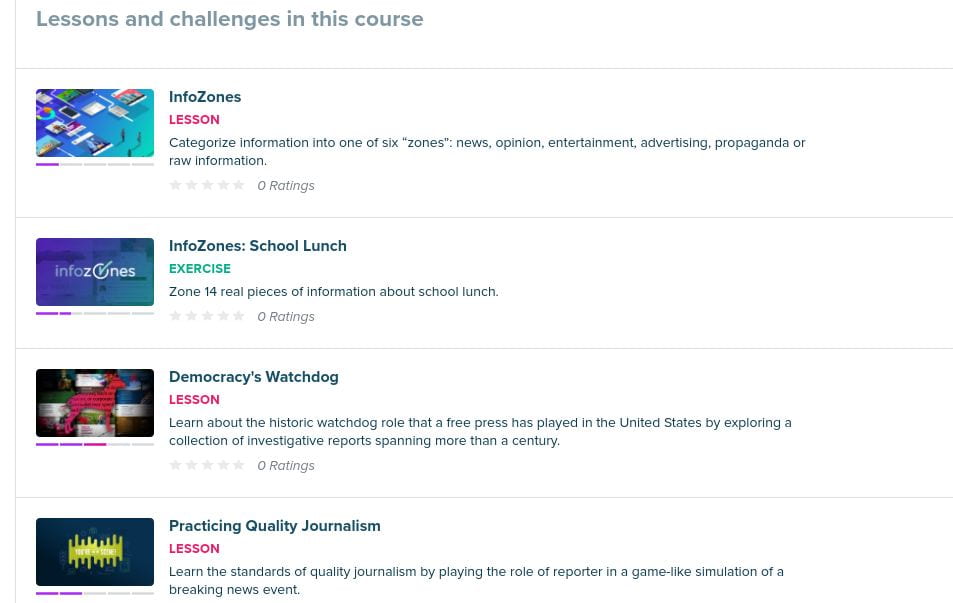
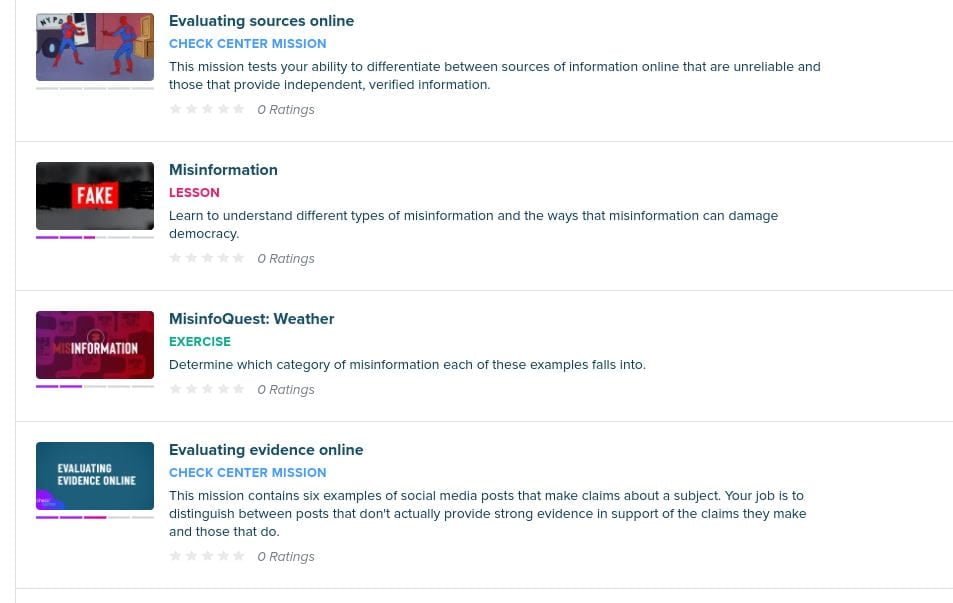
Checkology consists of about a half a dozen units per grade that cover the essentials of news and media literacy.  These units are often presented by actual news anchors and heads of news or media organizations.  Each unit includes lots of activities for students to test their newfound knowledge through the sorting of video, media, and other content into appropriate categories of information.  It also helps them to understand what makes some content credible and other content not.  And they do all of this while being simultaneously entertaining and engaging!  The clips that they use as examples are timely and relevant and students will feel right at home with the content.


Checkology will become an integral piece of my library programming here at the OJCS.  Media literacy is a key foundation of digital citizenship, and this incredible program can help our students get there.

Keeping Online Gaming Safe and Kind

Here is a workshop that can be used from grade 1 to grade 4.  We will talk about some of the most important ways we can stay safe and kind online while gaming.

  • Protecting our game passwords
  • Not sharing personal information in game chats
  • Being kind in game chats
  • Not being overly competitive
  • Finding our media balance
  • And remembering to be a great digital citizen

Here is a link to just the slides!

Cranky Bear Stories

I am excited because today is a super fun storytime.  We read not one, but 3 Cranky Bear books!!  I have also included a Cranky colouring page you can print out and colour!

The Very Cranky Bear by Nick Bland

The Very Itchy Bear by Nick Bland

The Very Brave Bear by Nick Bland

Print your own Cranky Colouring Page

Earth Day Story – The Curious Garden

To help us celebrate Earth Day, today we are reading ‘The Curious Garden‘ by Peter Brown.

Earth Day Activity Ideas

  • Recycle Bin Raid – find one item in your recycle bin and turn it into something new and amazing!  Maybe that little milk carton can become a tiny bird feeder!  Maybe that paper towel tube can become an art project giraffe!  Use your imagination to transform a piece of trash into a treasure.
  • Local Garbage Pick-Up – go out with a parent and find somewhere in your neighbourhood that could use a garbage clean up.  Remember to be safe and wear gloves and don’t touch anything sharp!
  • Be a Curious Gardener – if you can get your hands on some seedlings, do some gardening of your own.  If you aren’t sure how to plant a seedling, get a parent or an older sibling to help.  Gardening takes lots of practice, but over time you will get your green thumb.

Earth Day Story – Wangari’s Trees of Peace

Today we read the true story of Wangari Maathai.  The book is called ‘Wangari’s Trees of Peace‘ and it is by Jeanette Winter.

Discussion Questions

These can be discussed as a class or your answers can be left on this page as a comment.

  1. What parallels can you draw between Wangari and Greta Thunberg?
  2. What were some of the many ways that Wangari’s Green Belt Movement had an impact?
  3. How did the Green Belt Movement help to foster peace in Kenya?

Activity – Spread a Green Message on Your Socials!

If you have a school blog, TikTok, Instagram, Facebook, Twitter, or Snapchat account, use today as a day to post about an environmental topic that is important to you.  For some inspiration check out some TikTok #earthday videos!


Scrambled-Up Poetry

April is poetry month!!  Today we read a few mixed-up poems from the following books;

Scranimals by Jack Prelutsky, pictures by Peter Sis

and

Runny Babbit by Shel Silverstein

Activities

Depending on the age of your students, here are some great activity ideas for your students…

  1. Shel Silverstein Runny Babbit Worksheet (page 5 of document)  Decode some of Shel’s hilarious ‘Spoonerisms’.
  2. Create your own Scranimal!!  Combine a vegetable or fruit and an animal of your choice into a hilarious drawing.  Make sure you give it a silly name.
  3. For our grade 2+ students, here is a great video activity where students can create their own rhyming poetry.

The Elephant’s New Shoe – A True Rescue Story

OJCS Storytime

Today we read The Elephant’s New Shoe by Laurel Neme, Foreword by Nick Marx, and illustrated by Ariel Landy.


Chag Sameach – Passover Stories

Passover is almost here and so today I read two beautiful P.J. Library Passover stories…

Welcoming Elijah – A Passover Tale by Leslea Newman, illustrated by Susan Gal

and

Pippa’s Passover Plate by Vivian Kirkfield, illustrated by Jill Weber

Let’s Hunt for Spring!

The first day of Spring is MARCH 20th believe it or not!!  Today we read;

Hopper Hunts for Spring by Marcus Pfister

and

Spring by Stephanie Turnbull

Classroom Activity – Hunt for Signs of Spring

Go for a walk with your class and hunt for signs of Spring with this Spring Scavenger Hunt printout from the Backwoods Mama website!

Science Stories Part 3 – The Scientific Method

Today we read Charlotte the Scientist is Squished by Camille Andros, Illustrated by Brianne Farley.

Activity

This website offers 3 super simple experiments you can do with your young students to practice the steps of The Scientific Method.  Check out KidsAcademy!

Winter Fun Day – Tacky the Penguin

I hope you are all having a super fun Winter Fun Day!  Today we will read Tacky the Penguin by Helen Lester, Illustrated by Lynn Munsinger

Activity – Design a Snowglobe

Winter Fun Day – One Hockey Night

I hope you are all having a great Winter Fun Day!!

Today we will read One Hockey Night by David Ward and Brian Deines and learn how to play the game ‘Freeze Frame’.

Stories to Inspire You to Be a Maker!

Today we will get inspired to be makers!

We read:

Be a Maker by Katey Howes, Illustrated by Elizabet Vukovic
and
Rosie Revere, Engineer by Andrea Beaty, Illustrated by David Roberts

Check out this great resource for kid-friendly maker projects:

https://www.itabc.ca/success-stories/5-maker-activities-you-can-do-home-your-kids 

Tightrope Walking and Your Centre of Gravity

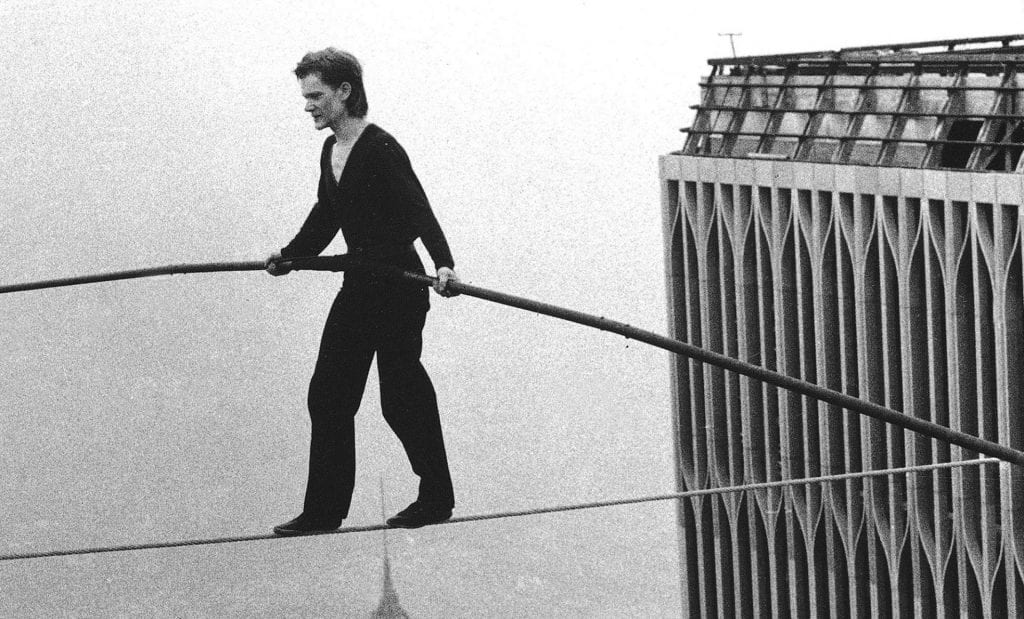
This week kicks off the first of three science-related storytimes just in time for that special part of the year where the OJCS puts the focus on science projects and STEAM fair!  We will read two stories about tightrope walkers and then do an experiment where your students can learn about centre of gravity!

Today we read;

The Man Who Walked Between The Towers by Mordicai Gerstein

High-Wire Henry by Mary Calhoun, illustrated by Erick Ingraham

NOTE: I apologize for the shaky camera, I didn’t realize that kids in the gym directly above were causing a mini earthquake!

Experiment Time!

Visit the following link for an easy experiment you can do at home or in the classroom! https://www.rookieparenting.com/can-you-balance-a-craft-stick-on-a-chopstick-science-experiment/

Purim Storytime – Cakes and Miracles

Happy Purim!!

Today we read;

Cakes and Miracles – A Purim Tale by Barbara Diamond Goldin, illustrated by Jaime Zollars

Black History Month Storytime

February is Black History Month so today we will introduce students to what Black History Month is all about with this 5 minute video (appropriate for all ages) and then hear a story inspired by Rosa Parks called The Bus Ride by William Miller, illustrated by John Ward, and introduced by Rosa Parks.

Watch This Video First!

Once you’ve watched the video, listen to the story:

Discussion Questions:

  1. Why does Sara feel sad for her mother at the start of the story?
  2. If you had to follow different rules because of your race or skin colour, how would you feel?
  3. Would you have had the courage to sit at the front of the bus, even if it was against the law?
  4. How does Sara become a hero to others?

Time Travelling with Dinosaurs!

Some fun stories and a bit of creative writing or drawing!

I chose some funny books about time travelling and dinosaurs to read today. They are;

We’re Back! – A Dinosaur Story by Hudson Talbott

and

Time Train by Paul Fleischman, illustrations by Claire Ewart

Activity – Creative writing or drawing

We will use these books to springboard some creative writing or drawing!

For our younger students or students who struggle with writing you will DRAW a picture of something that could happen if you went back in time to visit the dinosaurs or if dinosaurs came to our time to visit us.

For our students who are comfortable with writing you will write it as a short story.  Make sure it is ORIGINAL, we don’t want to hear the books I just read re-told.  Imagine something that could happen if you went back in time to visit dinosaurs or if they came to the future to visit you!

If you’d like to share them here, email them to me at b.ruel@theojcs.ca